Designing the Digital Dealership: How I Built the UX/UI for Saxdor’s Web Configurator
For high-ticket, customizable products, static images no longer cut it. As a Senior Product Designer at Younite.ai, I approached bringing the yacht dealership directly to the consumer’s living room.
If you’ve ever tried to buy a highly customizable, premium product — like a luxury vehicle or a yacht — you know the traditional process. You dedicate a weekend to visiting a dealership, flip through thick physical brochures, squint at tiny material swatches, and try to use your imagination to piece together what your six-figure investment will actually look like.
Today’s consumers expect more. They want to explore, customize, and build their dream products from the comfort of their couch, using their own phone or laptop.
At Younite.ai, my job as a Senior Product Designer was to solve this exact problem. By designing the UX/UI for our Virtual Showrooms, my goal was to transform a complex, overwhelming sales process into a lightweight, highly interactive web experience.
Here is a look behind the scenes at how we designed the digital sales funnel for Saxdor Yachts, and why the user interface is the true engine of direct-to-consumer sales.
The Challenge: Two Paths to Purchase
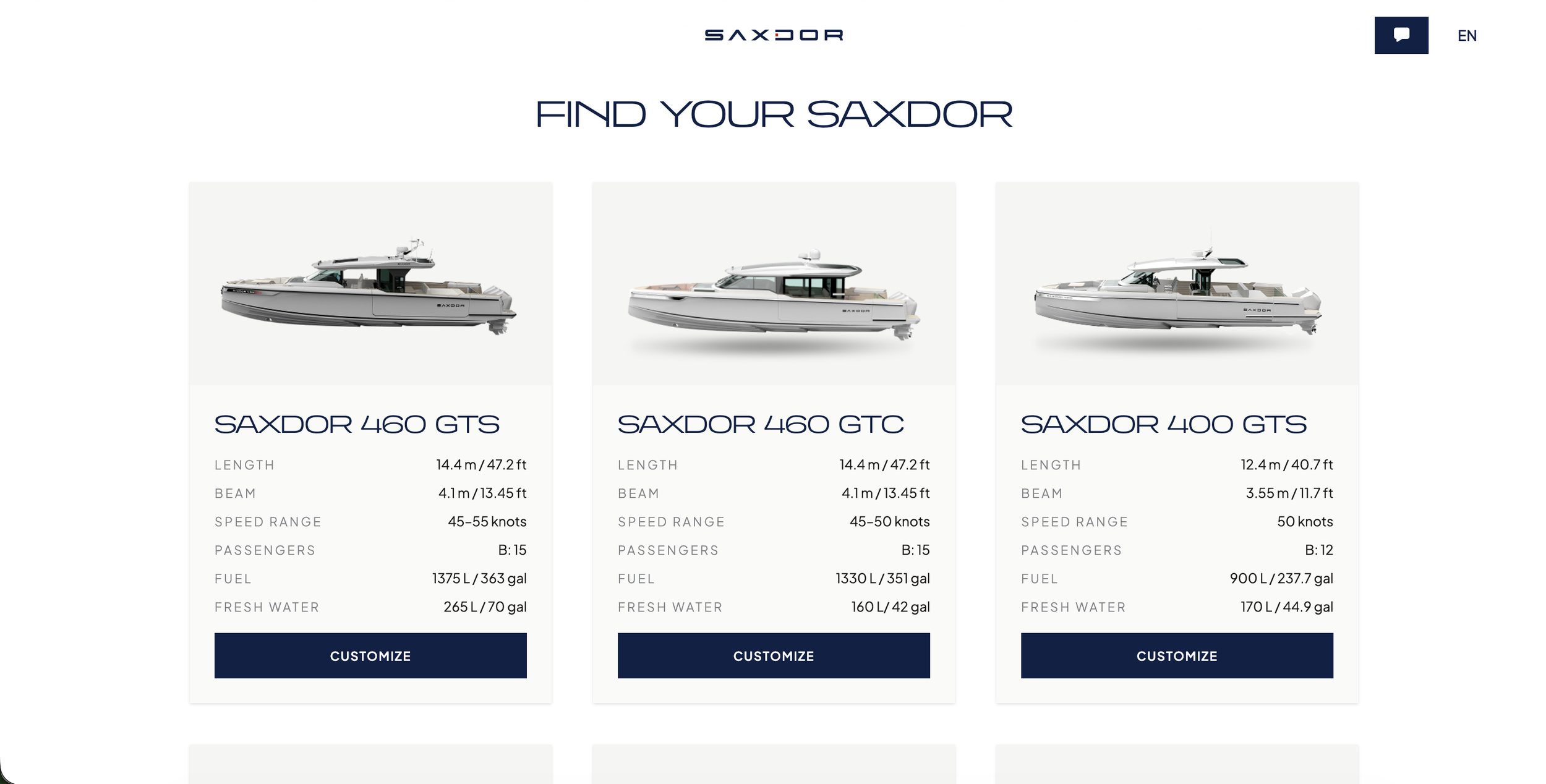
When mapping out the user journeys for Saxdor, we quickly realized a one-size-fits-all approach wouldn’t work. We had to build two distinct digital experiences tailored to very different users:
The Showroom App (Pixel Streaming on iPad device): Designed for global dealers and boat shows, this is a heavy-duty, high-fidelity application. It relies on pixel streaming from powerful cloud servers, allowing sales reps to present the most graphically intense, photorealistic environments imaginable on massive screens.
The Web Configurator: Designed for the everyday consumer browsing at home. This needed to be a streamlined, highly interactive 3D web configurator running natively in the browser.
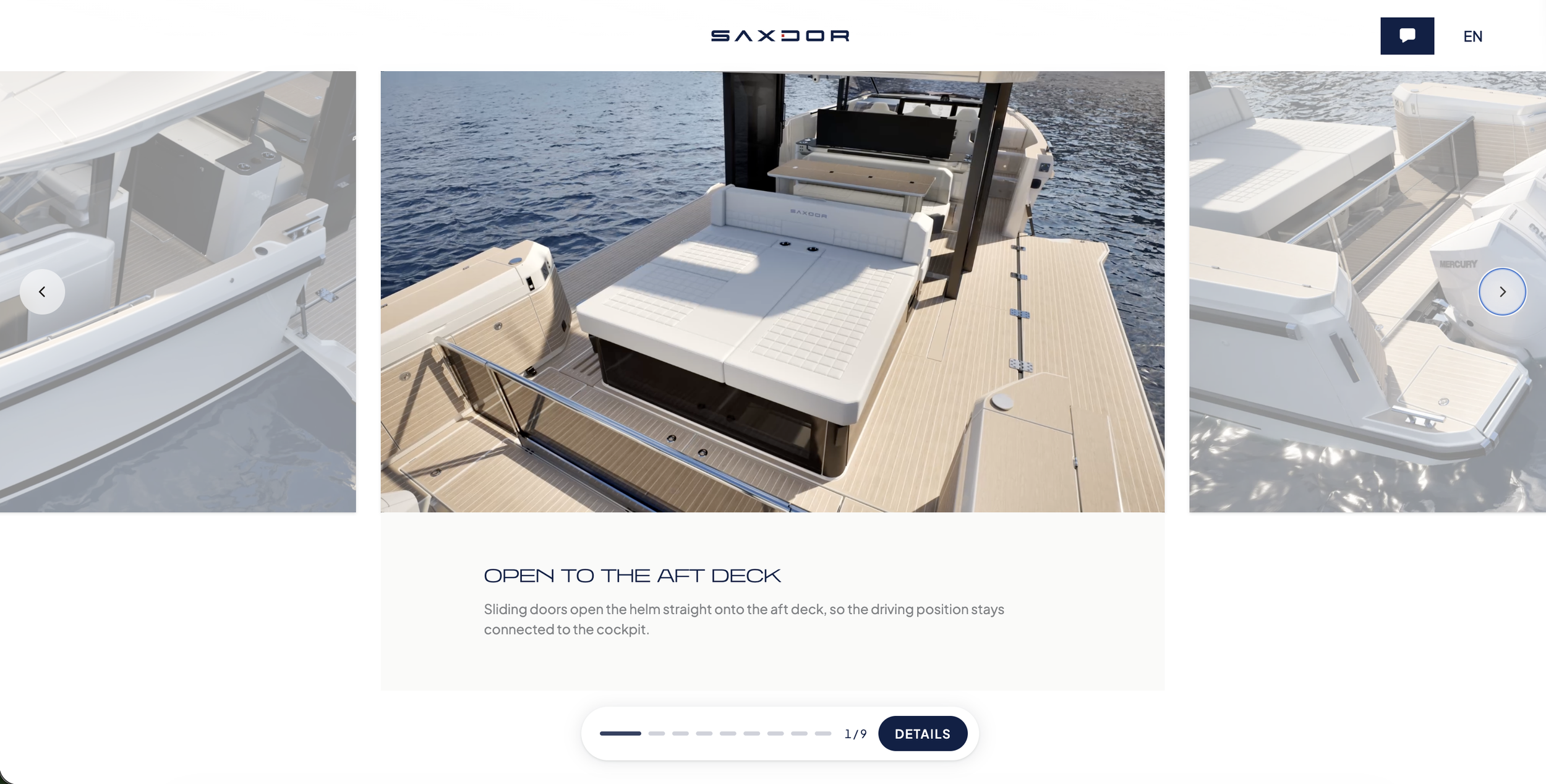
While the B2B app was designed for a guided, rep-led sales pitch, I had to design the web configurator for intuitive, unguided consumer exploration.
Designing the B2C Experience: My Core UX/UI Principles
Translating the core visual data of a luxury yacht into a web browser — without sacrificing quality or overwhelming the user — requires a delicate balance. No apps to download. No expensive pixel-streaming costs. No heavy hardware required.
Here are the primary UX/UI pillars I focused on to make this B2C experience a success:
1. Frictionless Accessibility
The magic of the showroom lies in getting out of the user’s way. A potential Saxdor buyer needs to be able to click a link on Instagram and immediately start customizing a yacht on their iPhone.
The Design Solution: I designed the interface to be radically minimal. By using optimized web technologies rather than heavy pixel streaming, the UI loads quickly and responds smoothly to touch gestures on mobile and mouse inputs on desktop. I kept the navigation menus intuitive so the user stays immersed in the 3D model rather than buried in dropdowns.
2. Curing “Imagination Fatigue”
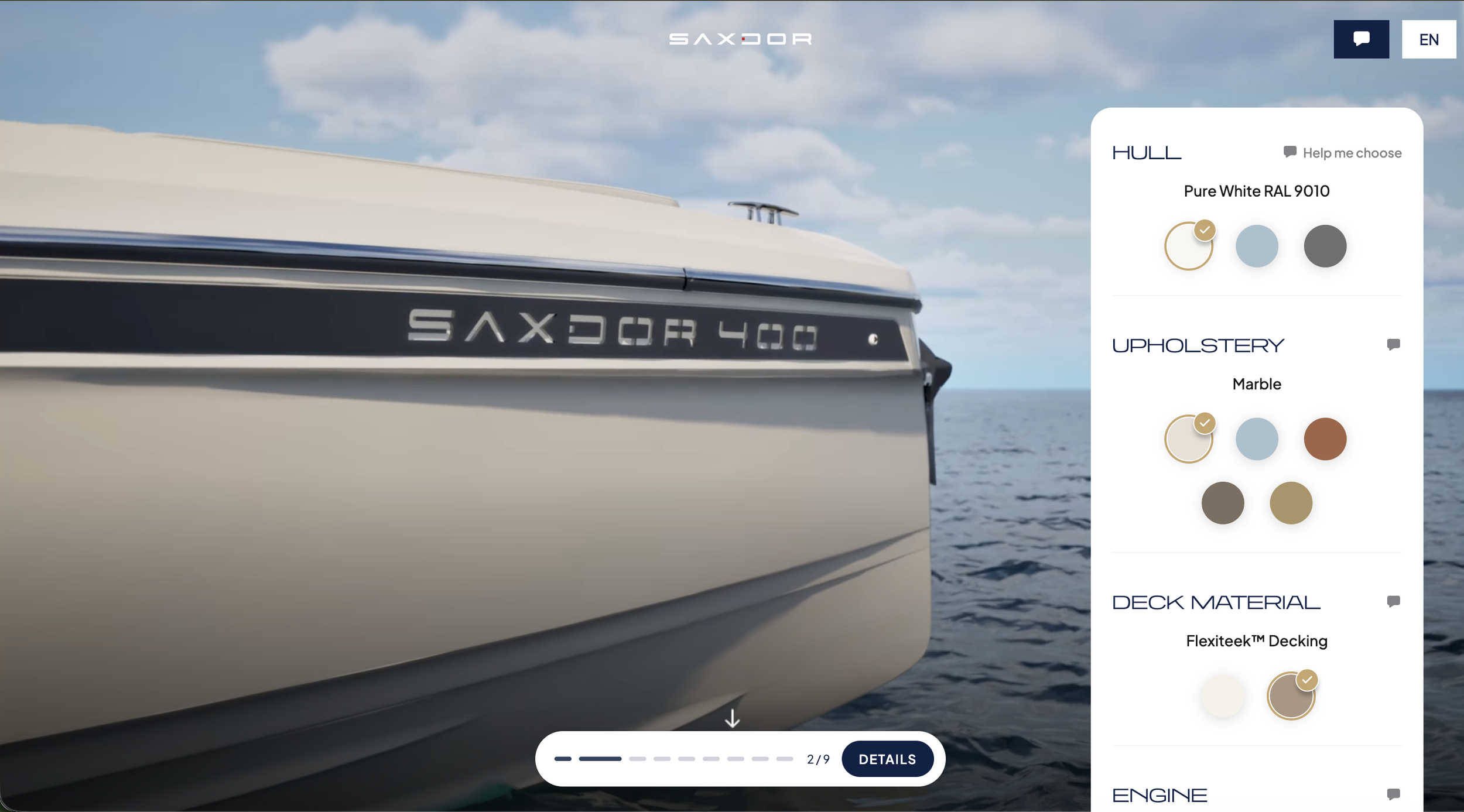
When a product has dozens of hull colors, upholstery variations, and engine setups, consumers suffer from cognitive overload.
The Design Solution: I built a UI that provides instant visual feedback. Instead of wondering how the ‘Marble’ upholstery looks against the ‘Saxdor Grey’ hull, the buyer taps a button and sees it instantly in 3D space. They can rotate the boat, zoom in on the deck layout, and see exactly what they are paying for. This visual confidence directly correlates to higher conversion rates and reduced buyer hesitation.
3. Emotional Ownership
A great web configurator gamifies the buying process. As users tweak options and watch their product take shape, they build a sense of emotional ownership.
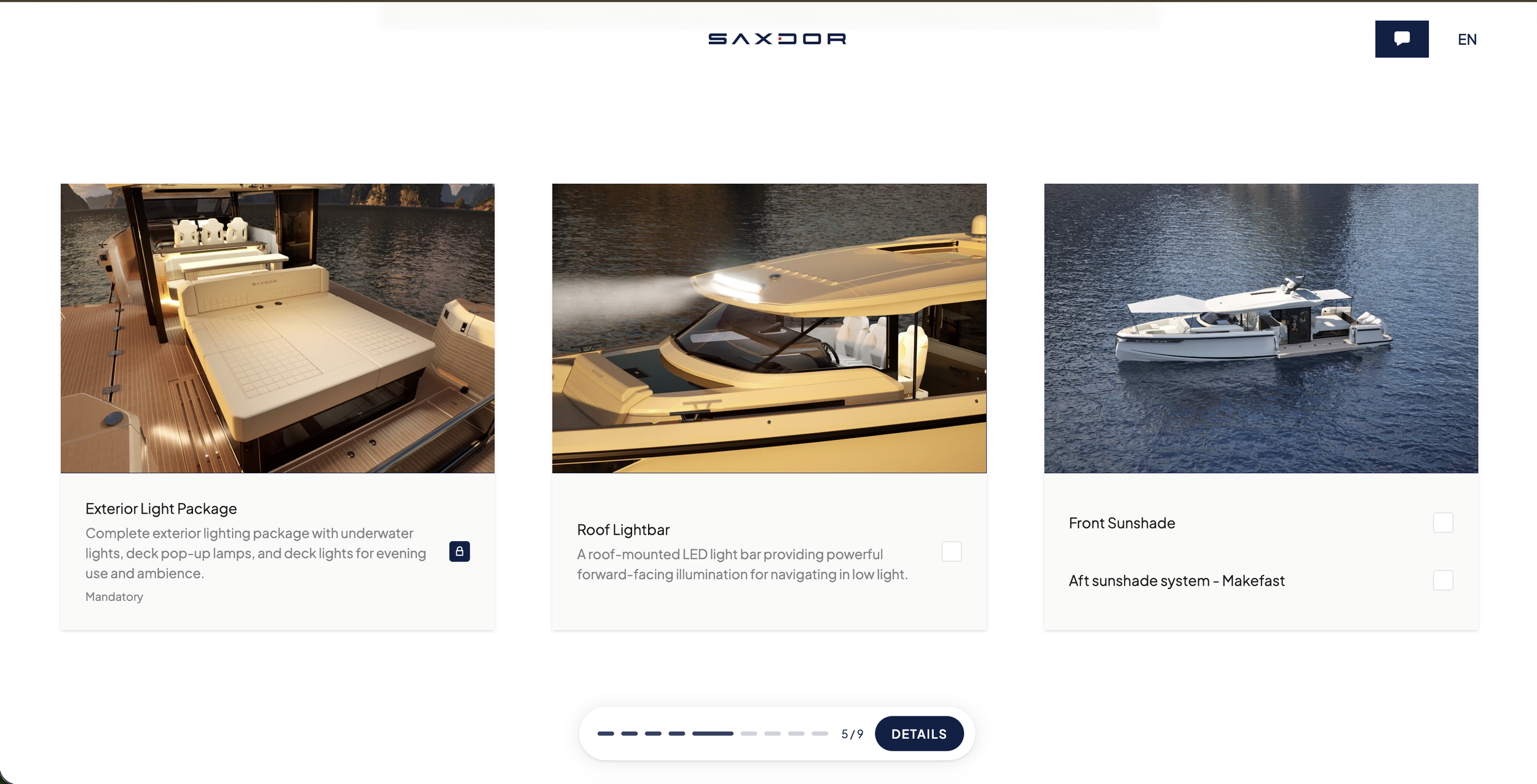
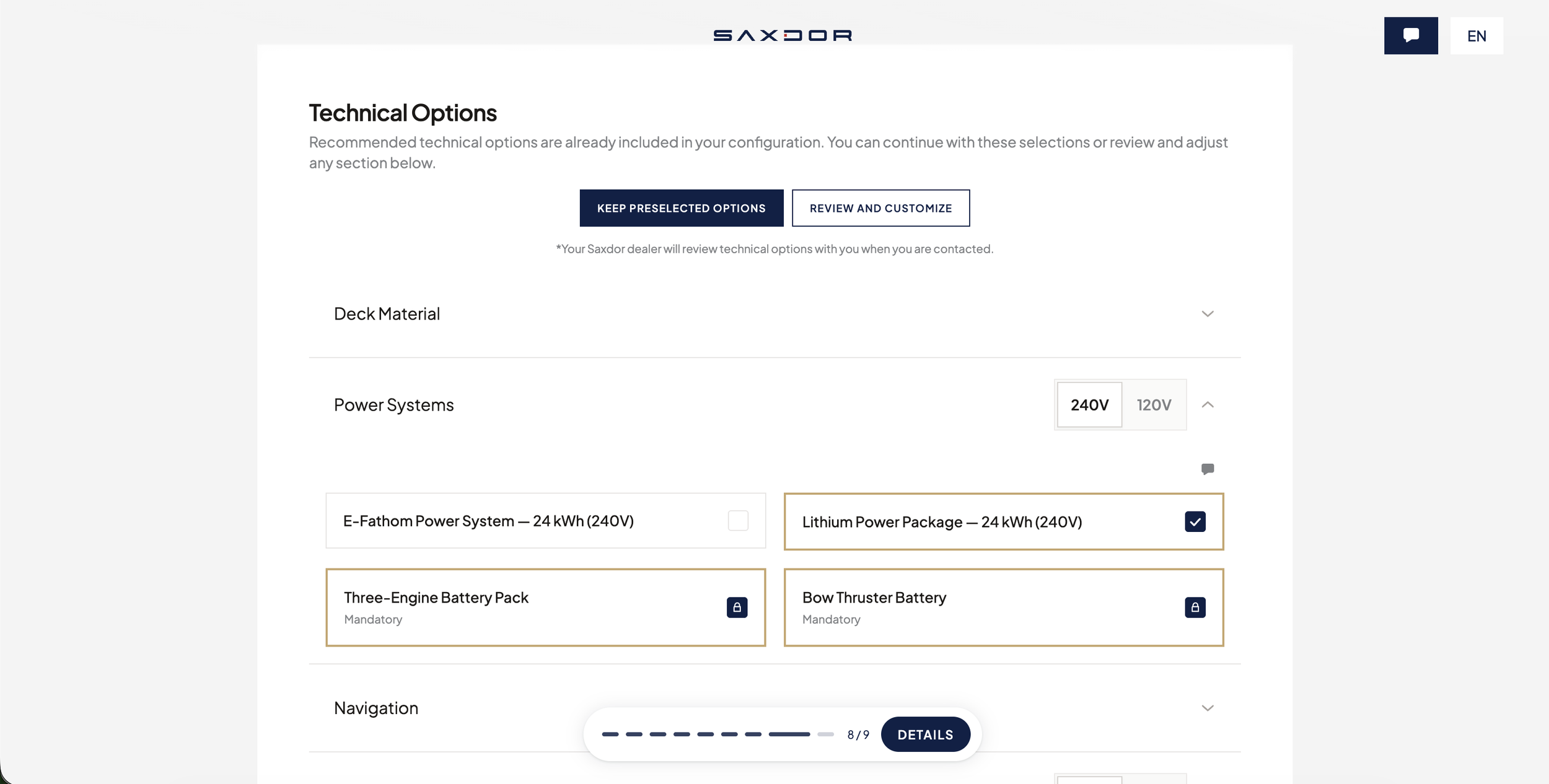
The Design Solution: As the user progresses through the showroom, the boat changes before their eyes. Changes in upholstery colors, hull color, engine type, whether they want that extra navigation screen or interior light package, the configurator has all the combinations of videos ready in the backend and fetches them live as the buyer makes their decisions. Each summary video shows exactly what they’ve chosen, exactly as if they were building a real boat in real time.
Bridging the UI to the Dealership
One of my main objectives was ensuring the web configurator didn’t just look pretty — it had to function as a lead-generation tool that empowered the actual dealers.
I designed the checkout and lead-capture flow to be completely seamless. By the time a consumer finishes playing with the Saxdor web configurator and clicks “Contact Dealer,” they are no longer a cold lead. They are a highly educated buyer. The UI packages their exact configuration data and sends it to the dealer, shifting the conversation instantly from “What are you looking for?” to “Let’s get this built for you.”
The Bottom Line
If you manufacture configurable products, your website is your new flagship store.
While high-end pixel-streaming apps are incredible for B2B events, your direct-to-consumer strategy lives or dies by the UX/UI of your web configurator. By designing an interactive, frictionless space for consumers to build and explore your products in their own browsers, you aren’t just showing them a product — you are inviting them to experience it.
Check out the Saxdor Yachts website and test out the web configurator today. Want to see the technology powering the next generation of web configurators? Check out our work at Younite.ai.
